
To Defend the Earth is to Defend the Human: Building a Pan-African Social Studies of Soil
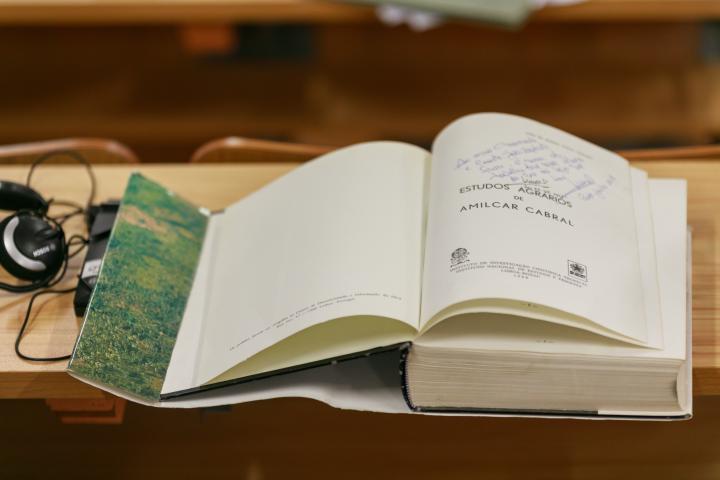
How can societies conserve themselves by conserving soils? What actors and frameworks are needed to shift towards soil care that is not captured by capital? How can we establish a soil-health-based understanding of habitability? And what other knowledge can teach us about soil conservation? These are some of the questions that we have been grappling with.
That soil is the basis of human and nonhuman life is a truism requiring no further elaboration. Yet, across the planet, soils are being devastated at alarming rates, jeopardizing the livelihoods of present and future generations. This was the case in Cuba, Portugal, Guinea-Bissau, and Cape Verde, where Amilcar Cabral conducted most of his studies and reached the conclusion that civilisation was at odds with soil health and conservation through its profit-oriented approaches to soil, leading to the erosion of the commons, collapse of fallow agriculture and growth of large commercial agriculture and private property regimes. Alarmed by the rate of soil loss due to erosion in Cape Verde and Guinea-Bissau, Amilcar Cabral always repeated “To Defend the Earth is to Defend the Human”, establishing a necessary connection between human and soil wellbeing, and freedom.
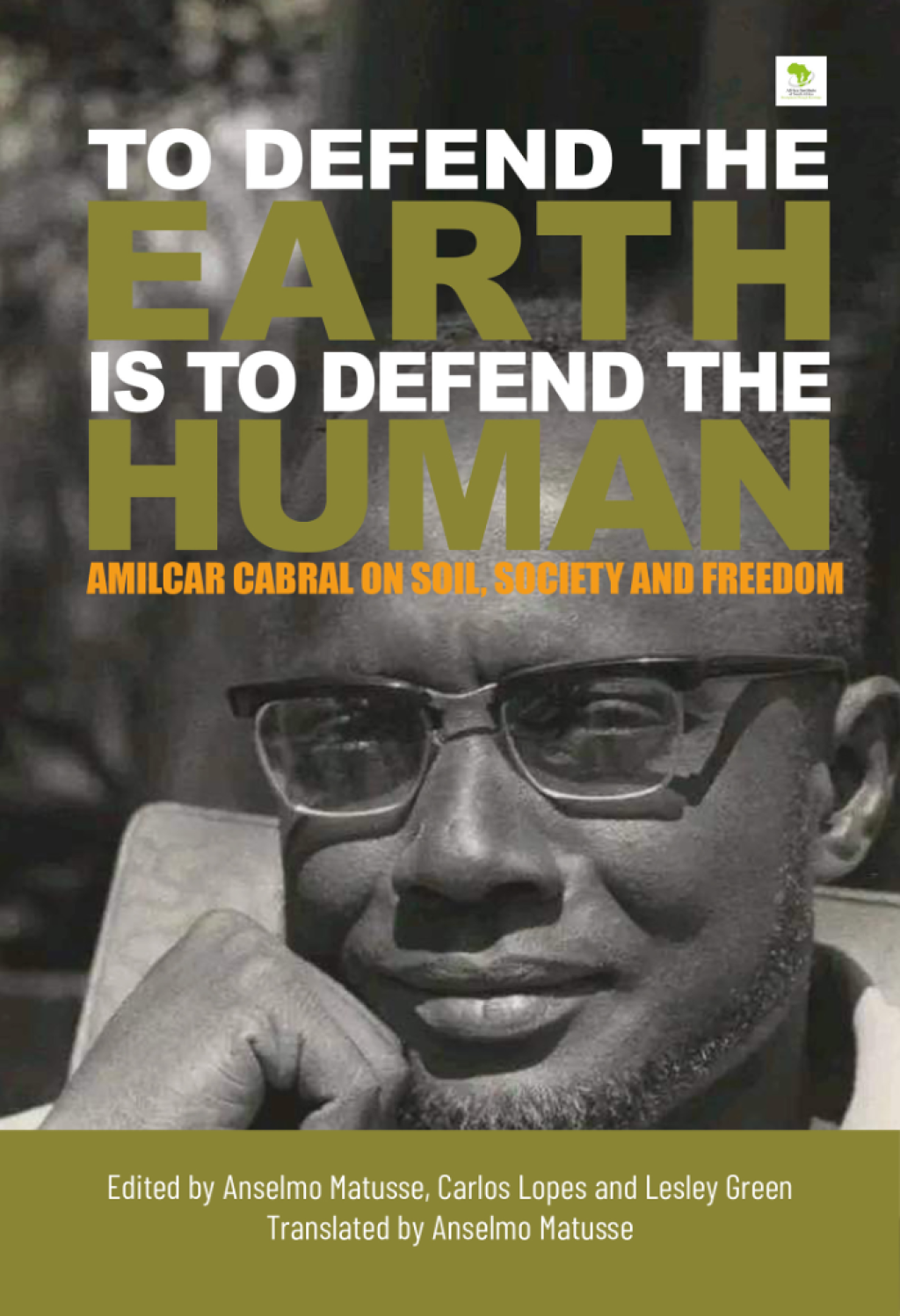
Fig.1 Book cover of the translated volume of Cabral’s agrarian writings to be published in March 2026.Fig.1 Book cover of the translated volume of Cabral’s agrarian writings to be published in March 2026.
It was following these ideas that a team of Critical Zones Africa took part in the 6th Biennale Conference of the African Studies Association of Africa (ASAA) from 23 to 27 of September 2025, in Cape Verde, Praia, with one workshop co-convened by the African Climate Foundation, Amilcar Cabral Foundation and Environmental Humanities South, titled “Soil, Society, Food and Freedom in Africa”, a panel on “Commons Governance and the Critical Zones” convened by Tawanda Jimu, and “To Defend the Earth is to Defend the Human: Amilcar Cabral’s Legacies in Agrarian Studies” convened by Anselmo Matusse.
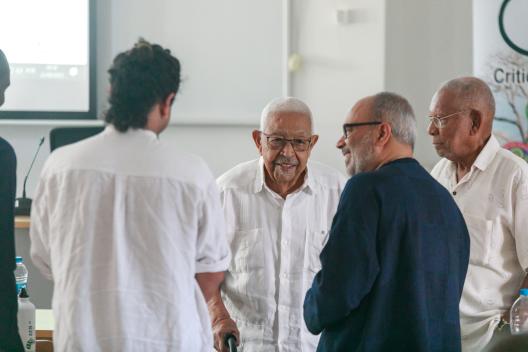
Fig. 2. President Pedro Pires chatting (in the middle) with Malik Dasoo (The African Climate Foundation) and Prof. Carlos Lopes (blue shirt).
The workshop, held as a pre-conference event on September 23rd, 2025, brought together local researchers, policymakers, agronomists, the Amilcar Cabral family, and others interested in rethinking how societies can relate to soils, drawing on Cabral’s visionary ideas. The workshop had two broad ideas: first, it sought to start a continent-wide debate on the potential of establishing social studies of soil. Second, it communicated about the upcoming manuscript with translated Amilcar Cabral’s agrarian works.
It became clear to all that the current pathway to soil use will result in what Cabral himself termed civilizational collapse. The need to reclaim African food systems, agricultural practices, and commons governance through citizen and democratized science was the cornerstone of his modernist view of defending the soil for the Black Africans and the whole planet.
The Amilcar Cabral Foundation, represented by the former President, Pedro Pires, seeks to connect Cabral’s rich archive with the world by breaking through the language barrier. Hence, they very much welcomed the translation of Cabral's agrarian work. Indeed, they expressed the desire to establish long-lasting relations with EHS as we build an Africa-wide Social Science of Soils.
As Cabral would state, we need “More thought to act better and more activity to think better.”
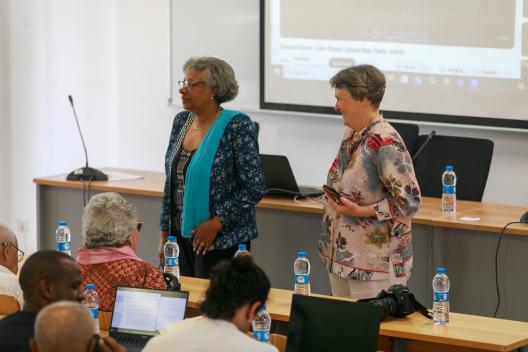
Fig. 3. Lesley Green about to give a welcome note in Portuguese, standing to her right is Dra—Madalena, from the Fundacao Amilcar Cabral.
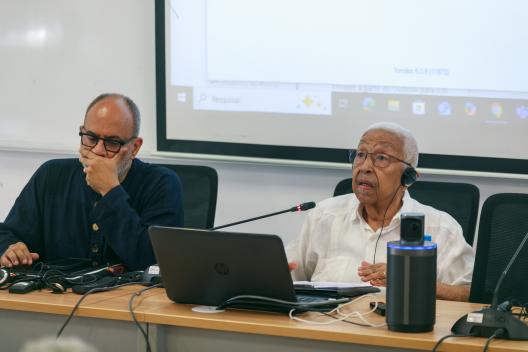
Fig. 4. President Pedro Pires is to the right, talking about Cabral’s legacies.