
Confronting My Fear: Doing Qualitative Research as a Soil Scientist

Behind every triumph lies an untold struggle, a truth that deeply resonates with my ongoing Ph.D. journey at the University of Dar es Salaam (UDSM). My research focuses on soil health changes in smallholder agroecosystems and their impact on landscape habitability among smallholder farmers. In an era of political-economy landscape changes, understanding soil health is crucial, as it directly influences agricultural sustainability, ecosystem resilience, and the well-being of both local communities and the nation. To gain a comprehensive understanding of this subject, my colleagues and I at UDSM, under the leadership of Prof. Christine Noe, conducted a 21-day field study employing qualitative research methods. This extensive fieldwork, carried out from March 3 to March 24 2025, provided valuable insights into my Ph.D. study, allowing me to explore the subject more deeply by incorporating people's voices as a complementary method within the transdisciplinary approach I am adopting.
It was fortunate that our fieldwork took place during a time of prolonged dry spell with minimal rainfall in some study areas, allowing us to reach the planned sites, conduct focus group discussions and/or in-depth interviews, and return to Ifakara town within a single day. The villages of Kisawasawa, Mkula, Kiberege, and Msolwa Ujamaa were easily accessible due to the presence of tarmac roads, which made the journey convenient and short. However, Chita and Mkangawalo were relatively farther and had rough roads that are not easily accessible during the rainy season. Despite this, we experienced only minor inconveniences in these two study villages.
To speak the truth, this was my first experience with qualitative research, and I must admit that I initially felt quite apprehensive. I am deeply grateful for the tireless supervision of Professor Noe who, from the very beginning, seemed to recognize my concerns and actively guided us through the preparatation and field work. Coming from an academic background rooted in quantitative research, adapting to this new approach was not easy. However, as the study progressed, I found qualitative research to be remarkably engaging and insightful. Engaging with farmers themselves, stakeholders, agricultural and extension officers and several other actors enabled me to gather an abundance of information that far exceeded my expectations. Over time, I came to understand why this approach has drawn the interest of prominent researchers, such as Proff Christine Noe and Proff Lesley Green, along with several other scholars in the CZA project. This experience not only deepened my appreciation for qualitative research but also reinforced its value in capturing the nuanced perspectives of local communities on environmental and agricultural challenges.
Equipped with essential field tools including a checklist with guiding questions, a notebook, and a voice recorder, I conducted focused group discussions with village council members and male smallholder farmers, including both elderly and young participants, to gather detailed insights across different age groups. Initially, I was nervous about how the participants would respond to my inquiries regarding their landscapes, however, I was pleasantly surprised by their positive and engaging reactions, which made our discussions more dynamic and insightful. A similar level of enthusiasm and cooperation was evident among administrative, agricultural, and extension officers, who provided unwavering support throughout the process. Even more remarkable was the warm welcome and open-minded attitude from stakeholders and key actors, who not only embraced my presence but also expressed a strong willingness to collaborate, reinforcing the significance of these discussions and the potential for meaningful partnerships in addressing soil health change. The fieldwork experience not only deepened my understanding of the research landscape but also inspired me to refine my study areas and strategically identify key informants for the subsequent phases of my research.
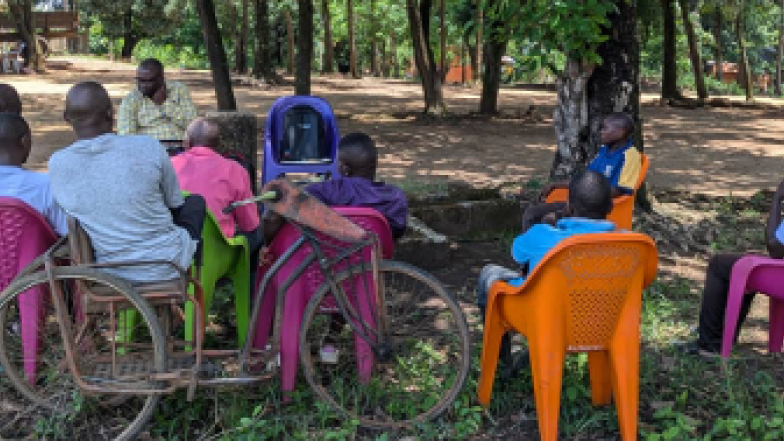
Focus group discussion with farmers at Msolwa ujamaa village
Every evening after a full day of fieldwork, I would take time to carefully review all the data collected throughout the day, organizing and summarizing the key findings. This critical process allowed me to reflect on the information gathered, identify emerging patterns, and ensure that no crucial details were overlooked. Once I had compiled the daily summary, I would share it with my colleagues for collective discussion and analysis. These review sessions, which were initially introduced and chaired by Professor Noe, played a pivotal role in refining our research approach. They provided a structured platform to address any uncertainties, clarify ambiguities, and critically evaluate the data. Additionally, these discussions helped us identify gaps in our understanding, allowing us to formulate new and more precise questions for subsequent interviews and focus group discussions. This iterative process not only strengthened the depth and quality of our research but also enhanced my own ability to engage with qualitative data in a more analytical and adaptive manner.
As I look forward to my upcoming fieldwork, I am mentally and physically prepared to navigate the challenging, steep, and rough roads leading to Chita and Mkangawalo villages. I also anticipate working in muddy fields across all study sites now that the rainfall has begun. This next phase of fieldwork will undoubtedly bring new challenges, but I am ready to face them with determination and resilience, fully aware that such obstacles are an integral part of the research process, particulalry in the Critical Zones Africa research project.