event
A sea of Caribbean Islands: Maritime maroons in the Greater Caribbean. Kevin Dawson
2 December 2021


Ataya: HUMA Interdisciplinary Seminar Series
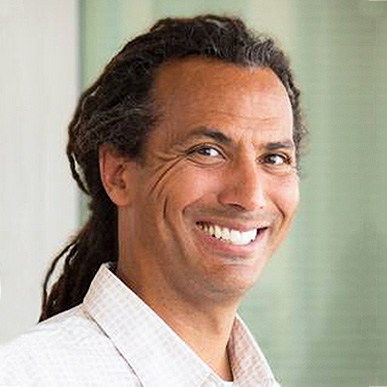
Project/Paper: 'A Sea of Caribbean Islands: Maritime Maroons in the Greater Caribbean' by Kevin Dawson, in Slavery & Abolition, Vol. 42, No. 3, 2021.
Bio: Kevin Dawson is a historian of the African diaspora at the University of California, Merced, United States. His scholarship considers how enslaved Africans recreated and reimagined Atlantic African maritime traditions, including swimming, surfing, underwater diving, canoe-making, canoeing, and fishing. These traditions made captives' exploited lives more bearable by providing them with a sense of cultural continuity, meaning, and belonging. Kevin Dawson has published articles and a book on this topic, including Enslaved Swimmers and Divers in the Atlantic World (Journal of American History, 2006) and "Enslaved Ship Pilots in the Age of Revolutions" (Journal of Social History, 2013). The book "Undercurrents of Power: Aquatic Culture in the African Diaspora" (University of Pennsylvania Press, 2018) received the Harriet Tubman Prize from the Schomburg Center for Research in Black Culture.
Topic: This talk considers how maritime maroons (enslaved Africans who escaped across seas) used Atlantic networks of communication to determine which overseas locations to escape to while employing African maritime techniques—African-style dugout canoes, paddleboards, surfboards, and their swimming bodies—to redefine their lives. Elaborating on the intellectual frameworks of Julius Scott and Epeli Hau'ofa, this talk examines how captives' layered African cultural, spiritual, and political meanings onto the 'Greater Caribbean' to transform it into a 'sea of islands,' making it a place of belonging and hope for their exploited lives. The talk is based on a recently published Slavery and Abolition article, which is the foundation for a larger project.