
A moment in allegory: Seeing the animal within ourselves before we do in others | The Circus and the Zoo: A group exhibition curated by Nkule Mabas
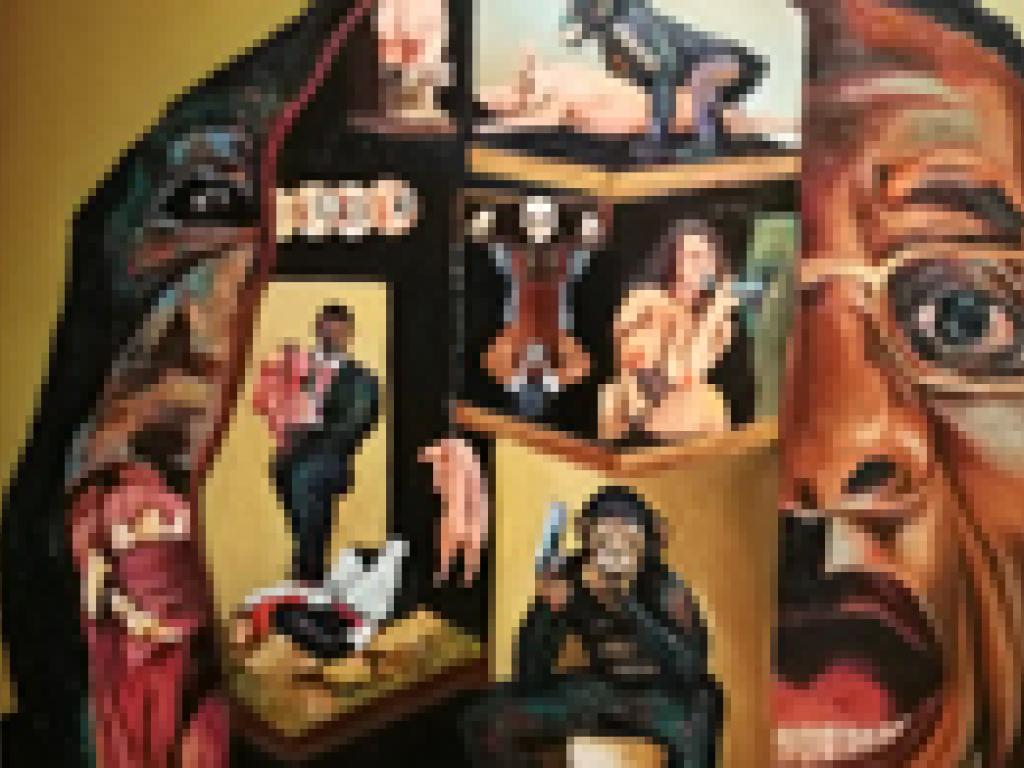
A moment in allegory: Seeing the animal within ourselves before we do in others
The Circus and the Zoo: A group exhibition curated by Nkule Mabaso
By Heinrich Groenewald
In the light of constant racial strife as the rainbow ideology is quickly turning to shades of grey between stark black and white, this year has been marked by a particular outrage over the comparison a white woman from KwaZulu-Natal made when she called black New Years day beach goers “monkeys”.
The black body is no stranger to such violence imposed by the allegorical language of being compared to animals. In the exhibition The Circus and the Zoo, curated by Nkule Mabaso, the invited works from seven artists engage with such subject positioning, alluding to the persistence of dehumanizing stereotypes that still pervade as a denominator for inherent racism.
Such a phenomenon is rooted in semantics and toys with notions of animal-like characteristics as revealing something about the primal nature of humans – undoubtedly a method of representative humiliation in service of group/race-based discrimination. However, The Circus and the Zoo seeks to not only tie human-animal comparisons down to the confines of identity politics but attempts to explore a far wider scope of unresolved historical grievances persisting in South Africa, through the topical medium of allegory. This exhibition serves as a visual investigation into the myriad of tacit and explicit forms violence can assume, to provide the viewer with insight into the ways allegorical meaning goes beyond literal representation.
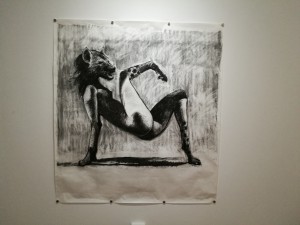
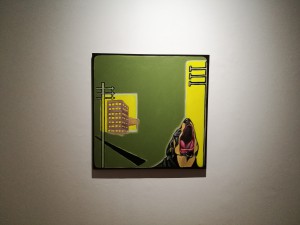
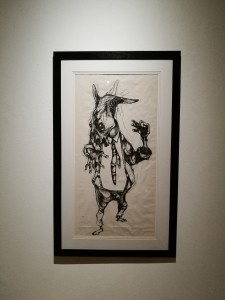
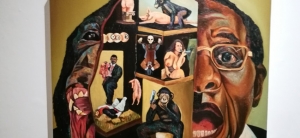
The Circus and the Zoo toys with the concept of human dignity as that which distinguishes human beings from other creatures. Allegory in this sense denies individuals their unique human traits, making them to be animal-like as a gesture of oppressing freedom and individual agency. In Mischeck Masamvu’s Behind locked doors does not feel safe anymore (2014), a flock of sheep heard and confine a group of mouthless bodies. Bold colour fields, perhaps of an abstracted landscape or mobs of imagined spectators, reveals a theatre Masavu questions; one where those in power push Others into marginalized fields of disillusionment through constrains that their language imparts: “Once those in power regard our existence as raw material, our lives become relevant as servitude to their tenure. The same speech will be repeated until the walls of resistance are broken down, and their words become fact.”
The works that form The Circus and the Zoo provide the viewer with a multiplicity of perspectives regarding allegorical tensions. While the message within this exhibition cannot be simplified in its aims, what it does reveal is the association we make within ourselves. Within the context of this exhibition, the relation of allegorical figures with symbols of alterity could serve as a medium for self-reflection, as the associations we make do not come from overt explanations from the artists. Instead, it occurs in the mind of the viewer, suggesting that perhaps the connotation between race and animal was made before it was read in the work. These entrenched assumptions make of the viewer the animal where our perceptions uncontrollably morph into the beastly chimeras of our past and present.