
Preservation Conservation Workshop II: The History and Current Practices of Preventive Conservation

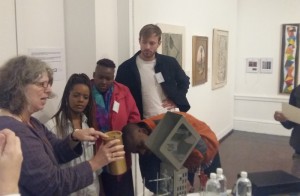
Museums and libraries are custodians of knowledge, artefacts, cultural and national heritage objects and artworks. The importance of caring for and preserving these collections lies in the fact that they provide us with vast information and knowledge about our world, and through their preservation, they can keep revealing more. We were privileged to recently have Professor Ellen Pearlstein from the University of California give the Honours in Curatorship students and staff of Iziko a specialist workshop on preservation conservation. The workshop aimed to make us aware of passive forms of conservation, the environmental impact museum preservation has, and trying to find more sustainable means of energy use.
The previous conservation workshop hosted at the Iziko South African National Gallery was based on art object conservation. In this second iteration, we looked at the preservation of collections that are housed within the museum environment. The week kicked off with a discussion on the role of the curator in preservation conservation. Curators need to take on a dual role – of exhibition maker and conservator. When dealing with objects and collections, curators need to act as custodians, as curatorial acts can either aid or disrupt conservation processes, and there are simple solutions curators can take to protect works, ranging from framing techniques to the physical handling of objects.
The effects of various museum conditions on objects was a second focal point of the workshop. There is a wide range of factors that influence the lifespan of an object, including temperature, relative humidity, pollutants, lighting in terms of lux levels, ultraviolet light and infrared. High temperature and humidity can cause can cause mold growth and extreme humidity could also cause water damage. Incorrect lighting can not only influence how museum audiences visually experience the collection, but it can also cause pigments and textiles to fade. Light causes accumulative damage to objects, which makes preventive conservation so important, as there is no way to rectify certain types of damage. All collections react differently to various climates. In a gallery with a high relative humidity, some objects may remain stable in such a climate, while others may rapidly deteriorate. It is then about finding a middle ground where the climate can be altered to accommodate for these collections preservation needs. Monitoring, testing, and research play an important role in ascertaining whether collections are at risk and finding the climate conditions certain collections might require. One of the most valuable elements of our course is the practical experience we gain in this regard — learning how to monitor all the influential factors in the museum environment.
On Wednesday, 24th of August, Prof Pearlstein gave an open talk at the South African National Gallery, on the assessment of significance and decision-making in object conservation. Ellen was discussing the humanistic elements in conservation decision-making. As a conservator she has to handle each object very differently, even objects of the same materiality can easily be differently influenced by context. The process of deciding when and how to restore particular objects cannot be divorced from its socio-political origins.
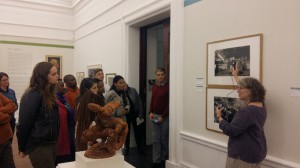

Special thanks to Professor Ellen Pearlstein, and to Iziko’s painting conservator Angela Zehander for organizing the workshop and giving us this invaluable learning opportunity.