
A feisty finale for 2012
Glen Ncube
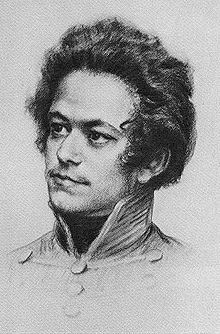
A contemporary drawing of a young Karl Marx, whose critical thinking forms the focus of a forthcoming introductory
study by John Higgins
Fresh conceptual currents were navigated and shared ground charted at July's Archive & Public Culture workshop, the research initiative's final gathering for 2012.
In a notable feature of the workshop, several papers grappled with the historiographic sensibilities and informal networks initiated by art exhibitions.Taking time to reflect on her own methodological approach, Clare Butcher's paper - emerging from her Masters research - tackled the historiographic sensibility or 'archival turn' in particular post-war South African exhibitions. On his part, Mario Pissarra underscored the importance of informal networks in the geo-political and geo-cultural reach of the legendary Mozambican artist Malangatana Ngwenya.
APC chair, Carolyn Hamilton's paper simultaneously tackled the state's neglect of public archival institutions in South Africa and the questionable utility of colonial archives, which have been under scholarly scrutiny for a while. Rather than totally eschewing such archives as tainted and irredeemable, as some have argued, Hamilton suggests that these imperfect archives should, instead, be part of the research story.
This innovative thought was further extrapolated in Gerald Mazarire's paper, which, while elevating the 'everyday life history approach' in the reconstruction of the historical place called Chishanga (south-central Zimbabwe), did so by letting the colonial archive break into his critical narrative. Visiting from the University of Zimbabwe's History Department, Mazarire's research interests include Shona oral traditions, environmental history, landscape and historical geography, history of liberation movements in Southern Africa and international solidarity.
The workshop also welcomed Dishon Kweya, one of Archive & Public Culture's two post-doctoral research fellows. Kweya's paper on the local archival work of community historian, Rev. Aggery Anduuru of Ebunyole, western Kenya, brought under scrutiny the processes and strategies involved in the making of community archives and identity formation.
Another interesting feature of the workshop was Nessa Leibhammer's presentation that played around the innovative concept of 'curating absence' as the post-modern panacea to the modernist curatorial practices of the Johannesburg Art Gallery in respect of indigenous material cultural objects.
The ubiquitous public culture of boxing in the Eastern Cape continued to enjoy the engaging scrutiny of Njabulo Ndebele, who critically praised the endurance of the sport in the context of state indifference.
The important questions of bibliography and how to write about the great thinkers also animated discussions during the workshop. Chris Saunder's Oxford Bibliography Online (OBO) not only extended the temporal focus of John Wright and Simon Hall's similar paper, presented during the April workshop, but also brought to the surface questions of selectivity and thematic representation in the creation of such a bibliography for a country like South Africa with its rich history of scholarship.
One of the most influential thinkers of modern times, Karl Marx, also received a fresh look from John Higgins, whose introductory text explored the 'specific nature and tensile strength of Marx's critical thinking' rather than the complex impact of Marx's work by way of 'diverse and competing Marxisms (Soviet versus Western, Chinese versus Cuban, to name but four of distinctive versions)'.
In featuring work by Christoph Rippe (on KwaZulu-Natal) and Maria Esparanza (on Chile) that both grappled with the nature and potential of archives produced by Catholic institutions in different geographical and temporal spaces, the workshop surfaced fertile ground for comparative study.