
Timbuktu manuscripts safely stored
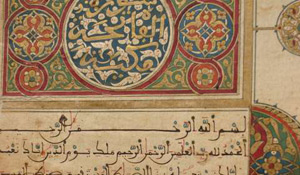
IMAGE COURTESY OF THE TOMBOUCTOU MANUSCRIPTS PROJECT
Director of the Tombouctou Manuscripts Project SHAMIL JEPPIE penned this update at the end of January in response to misleading news of the destruction of library buildings and book collections during the rebel occupation of Timbuktu. We republish it here
Since the start of this week there have been reports about the destruction of library buildings and book collections in Timbuktu. It sounds as if the written heritage of the town has gone up in flames. According to our information, this is not the case at all. The custodians of the libraries worked quietly throughout the rebel occupation of Timbuktu to ensure the safety of their materials.
A limited number of items have been damaged or stolen, the infrastructure neglected and furnishings in the Ahmad Baba Institute library looted, but from all our local sources - all intimately connected with the public and private collections in the town - there was no malicious destruction of any library or collection.
By Sunday, 27 January, the Ansar Dine rebels had fled Timbuktu. The French army and its Malian partners entered the town on that day.
One of the first reports on Monday morning out of the town was that a library and books had been set alight. A Sky News journalist, Alex Crawford, embedded with the French forces, reported from inside the new Ahmad Baba building, which is opposite the Sankore mosque. This building was officially opened in 2009 and is the product of a partnership between South Africa and Mali. It is meant to be a state-of-the-art archival, conservation, and research facility.
Images showed empty manuscript enclosures strewn on the floor, some burnt leather pouches and a small pile of ashes. She reported that over 25 000 manuscripts had been burned or disappeared. Additional images showed her going down to the vault of the archives and looking at empty display cabinets. No signs of fire could be seen.
The mayor of Timbuktu, Hallè Ousmane, based around 800 km away, in Bamako, was quoted in various media reports that a library building and manuscripts were torched by fleeing rebels. There is no other evidence but the word of the mayor. News spread to international media and the mayor's words were reported as hard fact.
We tried all of Monday, after these reports appeared, to contact colleagues in Timbuktu, but without success. The town has been in a communications and electricity blackout since around 20 January, we were told by Malian colleagues; no eyewitness reports had been coming out of the town for more than a week at this point.
In the evening, sources from Bamako reported that Mohamed Ibrahim Cissé, President of the Chairman of the Board of the Cercle of Timbuktu still confirmed, on France 24, that the new Ahmed Baba Institute building had been burned by the Ansar Dine before fleeing.
By Monday night we finally managed to contact our colleague, Dr Mohamed Diagayeté, senior researcher at the Ahmad Baba Institue, now based in Bamako. He heard much the same reports that we heard. However, he added that the majority of the manuscripts of the Institute had been still stored in the old building - opened in 1974 and on the other side of the town, from the new building.
He told us that the latest news about the new building, as of eight days before the flight of the Ansar Dine, was that the building had not been destroyed. He said that around 10 000 manuscripts had been stored in the new building since there was no more space for the manuscripts in the old building. They were placed in trunks in the vaults of the new building. Upstairs, where the restoration was taking place there were only a few manuscripts.
After seeing Sky News footage, he says that the images were of the few manuscripts upstairs waiting to be worked on by the conservators.
However, by Tuesday morning, Dr Mahmoud Zouber, Mali's presidential aide on Islamic affairs and founding director of the Ahmad Baba Institute, told Time, that before the rebel take-over, 'They [the manuscripts] were put in a very safe place. I can guarantee you. The manuscripts are in total security.'
Finally, the journalist Markus M Haeflinger, writing in Neue Zuercher Zeitung this morning, reports on his interview with the previous and present directors of the Ahmad Baba Institute in Bamako, on how the larger part of the Ahmad Baba collection was hidden and even transported out of Timbuktu during the crisis.
The protection of the cultural and intellectual heritage of this region needs to be enhanced and promoted. The abandonment of the security of Timbuktu nine months ago, the flight of archivists and researchers, and the closure of libraries should not be repeated. We remain in contact with our colleagues in Mali and are keen to establish precisely which manuscripts were damaged, destroyed, or stolen.