
Revisiting the narratives of Sister Quinlan's death
On Thursday, 20 March, Archive & Public Culture will be hosting a rare film screening and conversation between artist Penny Siopis and writer Njabulo Ndebele, chaired by Professor Gerrit Olivier of the Wits School of Arts.
On 9 November 1952, Doctor Quinlan (also known as Sister Aidan), an Irish nun who had studied medicine at Wits University and set up the St Peter Claver mission hospital in East London, drove into Duncan Village. When she encountered a crowd of people who were participating in the Defiance Campaign, protesting against apartheid laws - who had, earlier, had an angry confrontation with the police - she was stoned, stabbed and burned to death. Many of the people in the crowd knew and loved her.
In 2011, Siopis made a film about the incident called Communion.
On 9 November 2012, 60 years after the death of Doctor Quinlan, Ndebele spoke at a ceremony held in Duncan Village 'to remember and reconcile' with her.
Ndebele and Siopis have, as a writer and a visual artist, independently of each other, engaged with the same incident from South Africa's past. What kind of narratives can be construed from this horrifying event that took place more than six decades ago, and how do Siopis and Ndebele construct these narratives? What is the aesthetic and moral significance of returning to the killing of Doctor Quinlan and engaging with this extreme historical event historically? Olivier will mediate a public conversation between Siopis and Ndebele, in which these key questions will be explored.
Siopis will also screen Communion (2011), a work typical of her mode of filmic construction, in which she combines found footage with text and music to shape stories of individuals caught up, often traumatically, in larger political and social upheavals. Siopis situates Sister Aidan's 'voice' (read as subtitles); she narrates her own death, as if from the grave. Contingency is hooked to historical fact through Siopis's selective use of text in combination with film sequences - anonymous home movies that do not connect in any way to the empirical facts of the story. The sound is an African lullaby.
'If my primary school teachers had told us children the story of Sister Quinlan, they would have let us into one of the most painful yet most vivid moral and ethical tragedies in the modern history of our country,' said Ndebele in his speech, Love and Politics: Sister Quinlan and the future we have desired. 'Interestingly, a state hostile to black people would have wanted to use the story of the killing of Sister Quinlan as an example of the depravity of black people, who killed one who loved them. But for some reason, the state seemed not to have done so. The overall story of Sister Quinlan does accentuate her killing as a tragic mistake. Her death makes her larger than the "mistake" and carried the potential to be a transformative event for self-reflection by those who did the act putatively in the service of a larger cause.
'Hostile, loveless politics, always sees in the actions of love, its own hostilities, without recognising them as such, because accusation of others always lowers self-awareness. When you accuse others, you see more "over there" than "inside, here". In much of our public life in South Africa today, we see a great deal of this process. If the official curriculum of the time of my upbringing would never allow the telling of the story of Sister Quinlan, why are we not telling her story in our schools today?'
Penny Siopis is an Honorary Professor at Michaelis School of Fine Art. She works in painting, film/video, photography and installation. She has exhibited widely in South Africa and internationally and represented South Africa on the biennales of Sydney, Gwangju, Havana and Venice.
Njabulo Ndebele is an academic, a literary and a writer of fiction. He is the Chancellor of the University of Johannesburg and the former Vice-Chancellor and Principal of the University of Cape Town. Professor Ndebele is a Senior Research Fellow to the Archive and Public Culture Research Initiative (UCT).
Gerrit Olivier is professor of Afrikaans and Dutch literature at the University of the Witwatersrand. He was Dean of the Faculty of Arts and the Faculty of Humanities from 1996 to 2005. Currently he is based in the Wits School of Arts, where he supervises postgraduate students and teaches courses on Theories of Art and Key Moments in Twentieth Century Art. He is also involved in the Creative Writing programme in School of Literature, Language and Media. He has written extensively on Afrikaans literature and is working on a book on the significance of land.

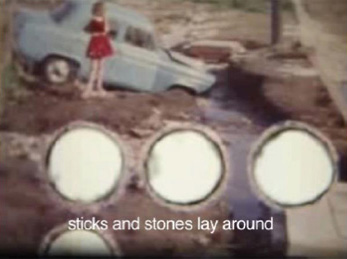
Stills from Communion (2011) by Penny Siopis