
Archival Platform Dialogue Forums
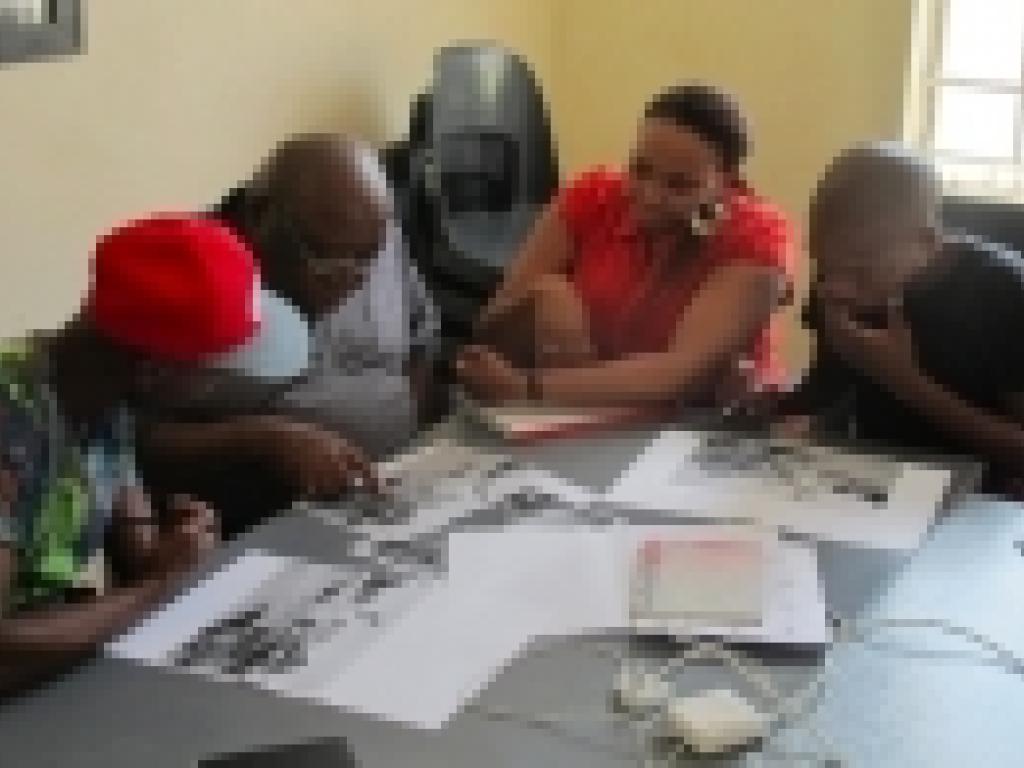
Residents of Vosloorus working with photographs of Stirtonville, whence many were displaced under apartheid Group Areas legislation. Photo: Jo-Anne Duggan.
Between 1 March and 31 July, the Archival Platform engaged with stakeholders across the country through a series of National, Provincial and Local Dialogue Forums. These forums played a useful role in bringing diverse stakeholders together to discuss common interests and shared concerns.
National Dialogue Forums
The first National Dialogue Forum (NDF), held in Johannesburg on 25 March 2015, preceded the launch of the Archival Platform’s report: State of the Archives: an analysis of South Africa’s national archival system. The forum was organised in association with the South African History Archive (SAHA) and attended by 26 delegates representing the provincial archives and records management services, professional associations, tertiary institutions, and activist archives.
The programme focused on two key issues: the implications of the Protection of Personal Information Act No 4 of 2013 for archival and records management practice, along with the draft code of conduct prepared by the Archival Platform for the sector; and the conclusions drawn in the Archival Platform’s State of the Archives analysis.
The second National Dialogue Forum held in Johannesburg on 31 July 2015, in partnership with the Public Affairs Research Institute (PARI), focused on the impact of record-keeping on good governance, accountability and service delivery, and on the status and placement of archives and records management services within government. It aimed to open up an important and long-overdue conversation into the status and placement of archives and records management services in government.
Provincial Dialogue Forums
The Provincial Dialogue Forums (PDF) focused on three issues: the Protection of the Personal Information Act; the Archival Platform’s State of the Archives analysis; and participants responses to three questions:
1) What would you like archives and records management services to do in the 21st century?
2) What archival legacy would you like to leave for future generations?
3) How do we work collectively to achieve this vision? This activity provided an opportunity for participants to build a vision for the future and to develop strategies to achieve this.
Extended Local Dialogue Forums
The first Local Dialogue Forum, implemented in partnership with the Anova Health Institute and Museum of AIDS in Africa (MAA), was intended to bring individual and institutional memory and records together to reflect on the changing face of the HIV/AIDS pandemic and responses to it.
The second Local Dialogue Forum was implemented in partnership with the Vosloorus Land Restitution Claim Committee and the Remembering Stirtonville Exhibition Steering Committee. Workshops were held to train community members to collect oral histories and to access historical documents and records. An interactive exhibition, was used to facilitate the collection of material including photographs, documents and oral histories to build on the resources gathered by the group.
Reflections on the Dialogue Forums
The forums were intended to draw together representatives from archives and records management services, civil society archives, academic institutions, museums and other related initiatives. Archivists and records management practitioners were well represented in all the Forums. We were particularly delighted at the enthusiastic response from records managers, especially those working in local and provincial government; they represent an important and often overlooked grouping within the broader archival sector.
While representatives from academic institutions, museums, libraries and related initiatives attended Forums held in the Western Cape, KwaZulu-Natal, Gauteng and the Northern Cape, few were present at forums in the other provinces. This can be ascribed to a number of factors. Firstly, it may be because museum and heritage practitioners hold a narrow view of archives as documents, signalling a need to promote a larger concept of ‘archive’.
Secondly, in most of the provinces with newly established archives and records management services, the focus has been on records management, so firm relationships have not been built with museums and heritage associations, as in, for example, the North West Province.
Thirdly, there are a limited number of academic institutions and museums in some provinces. There is not a single university in Mpumalanga, for example, and museums tend to be clustered in regions visited by tourists, rather than in the administrative capital.
Fourthly, the large area of some provinces, for example Limpopo, means that the distance between institutions makes travelling time-consuming and costly.
The inclusion of a diverse range of institutions and organisations in the forums brought archivists and records managers together with other stakeholders who share a vision for a broad and inclusive archive that supports a more nuanced understanding of the past, and promotes accountable government in the present. The forums brought officials and others including academics, representatives from professional associations and civil society initiatives together in a supportive environment to address troubling issues very directly.
For a more detailed report on the Dialogue Forums, please see the Archival Platform website.