
Duane Jethro attends Ethiopian conference on heritage, religious pluralism and social development
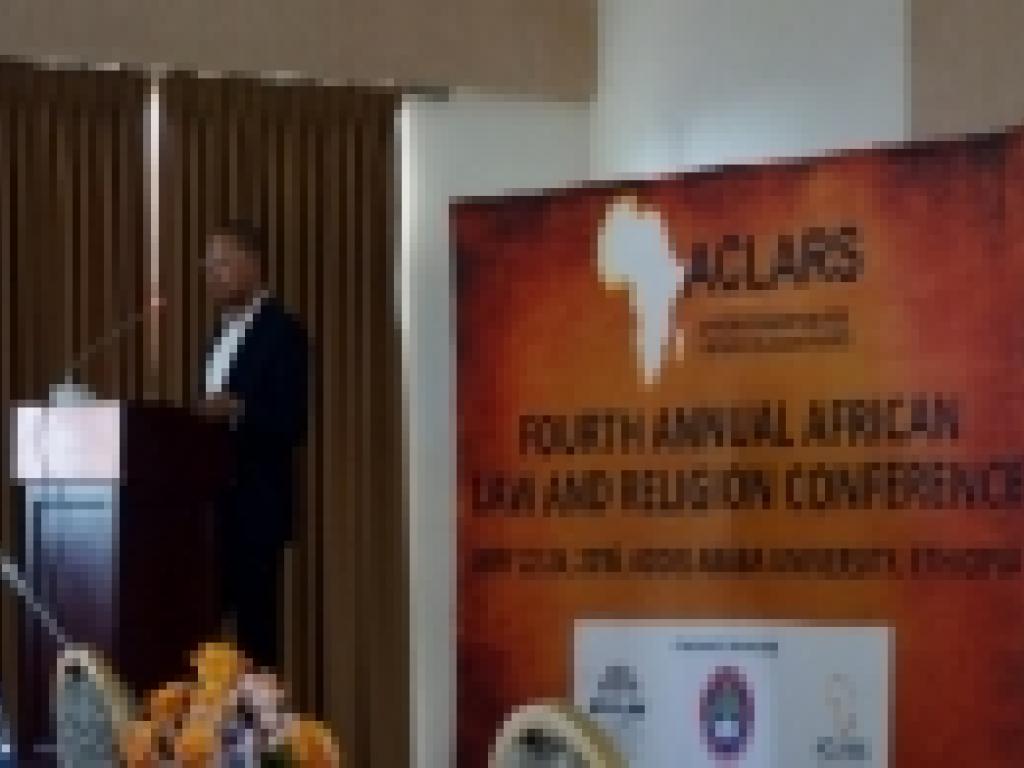
APC post-doctoral fellow Duane Jethro attended the ACLARS Heritage, Religious Pluralism and Social Development conference, held in Addis Ababa, Ethiopia, from 22 -24 May 2016.
The African Consortium for Law and Religious Studies (ACLARS), a subsidiary of the International Consortium for Law and Religious Studies, hosted its fourth annual conference at the Capital One Hotel in down town Addis Ababa between 22 and 24 May. This edition of the conference explored themes of heritage, religious pluralism and social development. At once looking back at heritage, at the past, but also forward to the future through social development, the conference set the stage for delegates, dignitaries and scholars to debate the role of religion and religious freedom in facilitating transformation in the present.
The conference kicked off on Sunday evening with a welcome by ACLARS chair Pieter Coertzen who introduced us to Ethiopian dignitaries and academics from the University of Addis Ababa. This led into the first plenary session, a panel which was meant to hear the voices of representatives of many of Ethiopia’s religious leaders.
The following day’s panels included consecutive plenary sessions on Law, Religion and the Secular State and Law Religion and Heritage in Africa. The later, a plenary, framed as a roundtable, was as interesting as it was frustrating. Holding out the promise of real dialogue about the social significance of heritage practice in Africa, the panel turned out to be a closed discussion about a now dated and problematic idea of heritage as an inherent social good implemented by Western experts for the development and benefit of those in the third world.
The late morning sessions were stimulating. A panel addressing education and religious pluralism in Africa was hosted in one of the smaller venues. It showcased a range of papers from southern Africa and Nigeria which, as a whole, highlighted the different, dynamic intersections of state power and the right to the protection of religious freedom in schools.
The Nile Hall was the venue for dinner on the second evening. Anton Knoetze, a commissioner on the Commission for the Promotion and Protection of the Rights of Cultural, Religious and Linguistic Communities in South Africa, delivered a keynote speech that presented preliminary findings of a commission-led investigation into the subversive role of religious movements in South Africa. Using footage of black African Pentecostal and Charismatic Church services as examples, Knoetze argued that South African’s religious freedom was being impinged upon by new religious movements led by dangerous charismatic figures who peddled false prophecies for illicit financial gain. The presentation evoked some strong criticism from the floor.
Duane Jethro presented on Tuesday the 24th of May on the panel Religious Pluralism in South Africa. The panel title was somewhat misleading as the presenters, including Georgia du Plessis from Antwerp University and Dr Nokuzola Mndende, all gave presentations that addressed questions of heritage, belonging and ‘tradition’ in contemporary South Africa. Jethro’s presentation, which dealt with neo-Khoisan identity formation and heritage practices in post-apartheid South Africa, was well received and drew comments about strategies to manage and address material cultural heritage.
Parallel sessions covered themes of Death and Dignity and Religion Justice and Tolerance, while the late morning plenary, Religion and Hate Speech, brought together speakers from South Africa, Kenya. The conference concluded in the afternoon with a tour of religious sites dotted across the metropolis, the ethnographic museum and a photo stop outside the African Union Building.
The depth and dynamism of the city’s heritage, and the calibre of scholarship at the conference showed that it would be worthwhile exploring transcontinental links and comparisons in heritage and archival practices.