Homegrown filmmakers make international waves


Pictured above: Mama Marikana production still. Photographer Andreas Georghiou
It is no wonder that the Centre for Film and Media Studies (CFMS) is a popular destination for students in the Faculty of Humanities. It is a vibrant, creative and challenging space that produces some of the industry’s most recognisable names and faces. In celebration of the department’s 13th anniversary, Humanities News shares some of the more recent successes achieved by current and former students.
UCT alumnus Aliki Saragas’s documentary film project has been selected to participate in the prestigious Good Pitch Kenya initiative. Good Pitch is an international film project that connects documentary filmmakers with ‘changemakers’ across civil society (foundations, NGOs, philanthropists, policy makers and the media). The project aims to broaden the appeal of documentary film amongst new audiences and unlock public sector funding opportunities. As part of her MA in Documentary Arts, Saragas spent two years making Mama Marikana – a film about the rebuilding of a community following violence and loss. The film offers a unique perspective on the Marikana event, focusing on the experiences of the women left behind after the massacre. When the film was submitted, her peers and academic supervisors were so impressed with the work that she was invited to screen the film at a Gordon Institute for the Performing and Creative Arts (GIPCA now ICA) event. Uhuru Productions, producers of the Emmy Award winning film Miners Shot Down, subsequently came on board as co-producers. What is hugely impressive is that Saragas’s film is one of only 6 projects from Africa, selected from over 100 applications, to feature at Good Pitch Kenya. Mama Marikana is one of the flagship productions to come from UCT’s Master of Documentary Arts - a programme that encourages students to produce engaging South African films that address critical political, economic and social issues.
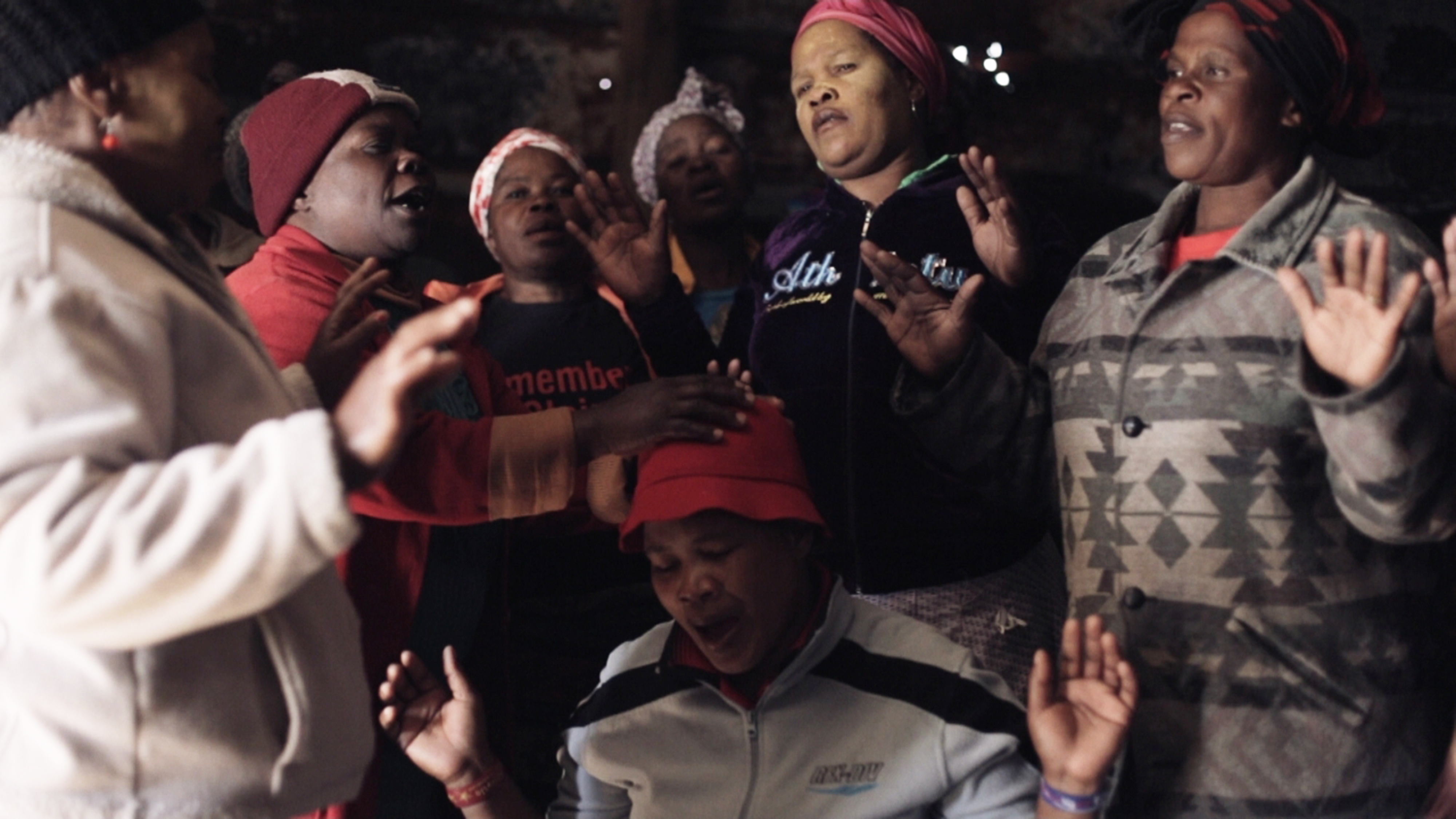
Saragas who obtained her Masters degree in Documentary Arts with distinction in 2015, says that in telling this particular story she wanted to give greater prominence to the wives and mothers of Marikana and in so doing, provide a more complete account of the event and its aftermath. “The process of Mama Marikana began as my thesis film towards my Masters in Documentary Arts at UCT and was inspired by an article I read entitled “The Missing Women of Marikana” by Camalita Naicker. I was completely overwhelmed by the seemingly forgotten and voiceless struggle of the community and women behind the mineworkers’ plight; women who are central in not only keep the production of the mine going through their unpaid labour but who were intrinsically and irrefutably involved in the social justice campaign and activism after the massacre so as to try to rebuild their community and find justice. I wanted to tell their story through this lens, and through their eyes and experience, as I felt most main-stream media thus far had failed to properly grapple with not only the pain, but also the strength of these women. I wanted to add to the discourse and show that the story of Marikana is not yet complete without these voices,” she says.
And the hits keep coming. The third year student production Into Us and Ours has been selected to feature in the Cannes Short Film Corner, which takes place 11 – 22 May this year. Into Us and Ours is a short fiction film that was produced at the end of 2015 by Jessie Zinn; Katherine Werge; Junaid Rawoot; Declan Khan; Alex Grieve and Chase Musslewhite as part of the Screen Production course. The 13-minute movie is gaining local and international recognition for its complex, multilayered story of two South African ‘born-frees’ who over the course of one day, are forced to question their fractured connection. It stars current UCT drama students Qondiswa James and Emilie Badenhorst alongside professional South African actors Faniswa Yisa and Nhlanhla Mkhwanazi. The Cannes Short Film Corner is a platform for emerging filmmakers and an important international networking opportunity. In addition, Into Us and Ours won another award for Best International Short Film at the Ivy International Film Festival for 2016, held at Brown University (USA). The Ivy is fiercely competitive and some of the selected films go on to win Oscars. Speakers at the 2016 event included Robert de Niro and Jodie Foster. “We are living in a country that has been experiencing important dialogue surrounding education change, institutional racism and interpersonal dialogue between born-frees. This is what our film is about. So of course I am thrilled with our international achievements, but I am also incredibly excited about the dialogue and conversations that our film inspires locally when we screen it to people here in South Africa” says Zinn.

Jas Boude, a short documentary film produced in 2014 by then third year Screen Production students Georgina Warner, Imraan Christian and Fritz Bucker, was nominated for a Best Student Film SAFTA award this year. The film is about the stark socio-economic divisions that exist between the inhabitants of the Cape Flats and residents of the Cape Town inner city suburbs. Warner, Christian and Bucker obtained their BA in Film and Media Production degrees from UCT in 2014.
The University’s Stepping Stone programme received recognition at the 36th annual Telly Awards, held in 2016. Stepping Stone is the Centre for Film and Media’s (CFMS) community engagement initiative designed to support talented aspiring filmmakers. The NQ5 courses are made possible thanks to a grant from the Fox Foundation. Stepping Stone produced six Higher Education Today talk show episodes as part of the June/July 2015 course. Two segments, one on Curriculum Changes and another about a musical on Miriam Makeba, earned Bronz Telly Awards.

Liani Maasdorp is a film lecturer at the CFMS and convenes the Screen Production courses as well as the Master of Documentary Arts. She says that there is a reason why these and other department films do so well at local and international film festivals. “We train exceptional young people at UCT who make us proud, year after year. And I think the successes of our student productions reflect the quality of the academic input, practical training and mentorship we offer aspiring filmmakers who study with us at CFMS.” says Maasdorp.