
Now out: the "IZITHUNGUTHU" Conference Report
In July 2015 the Archive and Public Culture Research Initiative, together with Dr. Bodhisattva Kar (History, UCT), organised a colloquium with the title “IZITHUNGUTHU: Southern African Pasts before the Colonial Era, Their Archives and Their Ongoing Present/ Presence.”
Why such a title? What are izithunguthu?
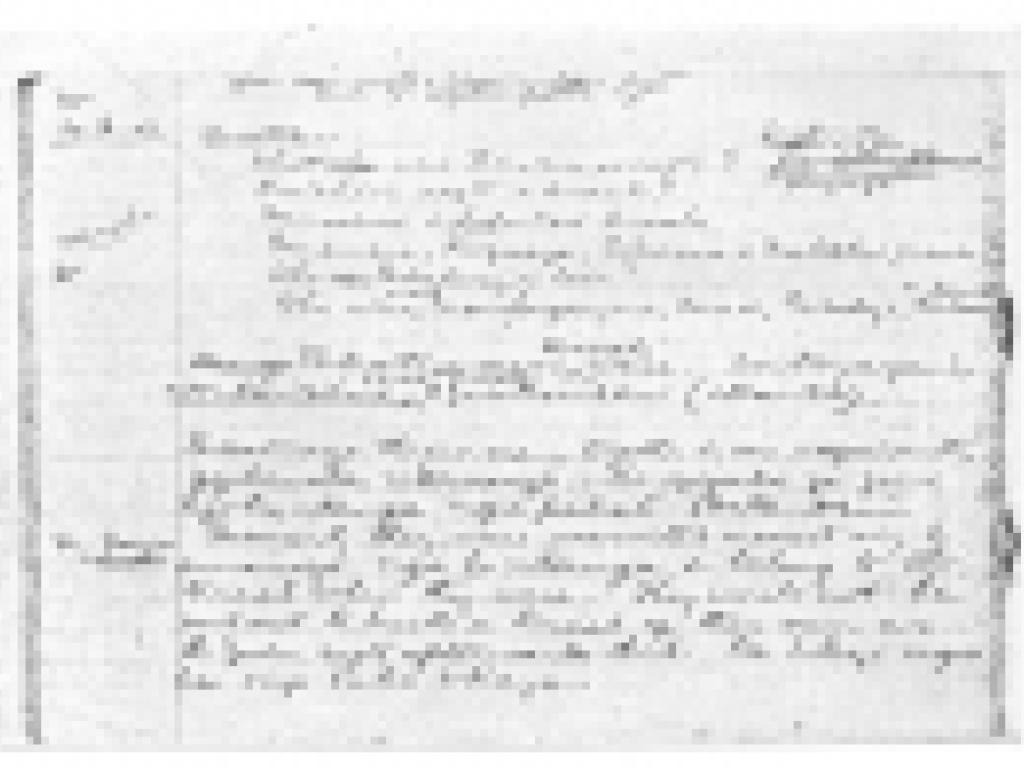
The term izithunguthu was drawn to the attention of the colloquium organizers by John Wright, editor of The James Stuart Archive of Recorded Oral Evidence Relating to the History of the Zulu and Neighbouring Peoples (6 volumes, 1976-2014, ongoing). It appears as a note scrawled by James Stuart in the top margin of p. 12 of nbk. 27 of File 60 of the Stuart Collection, on 10 June 1903. As Wright notes, Stuart was at the time conversing about the past in Durban, where he was assistant magistrate, with Thununu kaNonjiya, a man in his late eighties, who in his youth had been an inceku, or household attendant, at King Dingane’s capital, Mgungundlovu.
The note, which seems to be recording verbatim a statement made by Thununu, reads as follows: "You can write & remember but tina si izitungutu nje." ("You can write and remember but we are simply izitungutu’".) Wright scoured the dictionaries for the meaning of the term, eventually digging it out of Bishop Colenso’s nineteenth-century Zulu-English Dictionary: "One flustered or put out, made to forget by being scolded or cross-questioned, though well-informed."
“This,” comments Wright, “is Thununu talking about his own experiences as he speaks to Stuart about the past. This is a man who has been steeped in the oral history of his own Qwabe people, and of the Zulu kingdom under Shaka and Dingane, for nearly 90 years. He knows this history; it is important enough to him for him to want to tell it at length to Stuart. It is no accident that the note comes at the top of a page on which Stuart lists a number of questions on Qwabe history which he proceeds to ask Thununu – the cross-questioning of a well-informed oral historian, who sees his memories being captured in writing in front of him, and is aware that they may be transformed in the process.
"Thununu is probably commenting not so much on Stuart’s doing this as more generally on what written memory is doing to the oral history known by izithunguthu like himself. He is speaking about the partial erasure of the oral history archive, and its transformation into writing, that was going on in the society in which he lived. It is an extraordinarily important historiographical moment.”
It is also a very complex moment. Engaging with this kind of complexity lies at the heart of any attempt to enquire into the long South African past, and was part of the rationale for the colloquium.
What did we speak about in the colloquium?
Understanding of the long past has been profoundly shaped by colonial and apartheid knowledge practices. These practices were significant in the making of ideas of tribe, ethnicity, tradition and the timeless past, and in creating the bodies of material like the James Stuart Archive.
The opening address by Paul Landau, “Getting Past the Ethnic: Discerning African Politics of the Past”, revisited South Africa’s deep political past. Landau argued that while Africans rightly look back at histories of particular associations and kingdoms or chiefdoms, an ethnic view of the past can suggest, misleadingly, a long “pre-history” of persisting, discrete, simple forms. Drawing on his own research (see his 2010 book, Popular Politics in the History of South Africa, 1400-1948), Landau argued that millennia of sub-continental political activity produced a kind of political theory stored in oral history. He further argued that foreign ideas and markets critically shaped the deployment of that theory, all across “pre-colonial” South Africa.
The opening address inaugurated two important themes of the colloquium: an unsettling of the ready ways in which ideas of ethnicity that came from the nineteenth century and later have been transported backwards in time; and the idea of oral accounts as forms of political discourse and as instances of political theorising. The various presentations probed these matters, with varying emphases, dissimilar approaches and divergent methodological and political stakes. It was asked if the histories conventionally enclosed as tribal cannot be reopened to non-identitarian concerns, if the social scientists were ready to move beyond the statist demands of unequivocal identities, exclusively recuperative approaches to the pasts and the assumption of complete commensurability between different epistemologies. The poignancy of these questions was underscored in the ways in which the government today seems to transport old colonial and apartheid structures into the future, justifying them as traditional indigenous forms from the past before the experience of European colonialism.
The colloquium also set itself the challenge of attempting to rethink what is often termed the precolonial beyond the strictures of prepositional time. In simpler words, we tried to respond to a fundamental dilemma captured by the term "precolonial": does that past make sense only in relation to the colonial? Is the precolonial condemned to be understood only in terms of its putative opposition to and irreconcilability with the colonial? Or, are there other possible ways of claiming a certain discursive autonomy for this long past? In engaging these sorts of questions, the colloquium grappled not only with the enormous methodological complexities involved in the process, but also, and simultaneously, with that past’s entangled lives in the contemporary. Attention was repeatedly drawn to the variety of ways in which contemporary artists, writers, family and clan historians, politicians and intellectuals – imaginatively, strategically, subjectively, critically, affectively – engage the body of inherited materials that academics and lawyers use as “sources”, often with very different purposes, from the celebratory through the denunciatory to the parodic. All of these engagements with the times before European colonialism, and with the ways in which the colonial and apartheid eras had dealt with the earlier periods, fell within the purview of the gathering.
The colloquium discussion highlighted the many styles in which the “pre-colonial” is embedded in contemporary political discourse, how it is being subjected to intense cross questioning, and how there is a lot of “flustering”. It noted how the Rhodes Must Fall movement has called for much more pre-colonial history in the university curriculum and how weak the teaching of the long past is in schools. It explored the role of the long past in chiefly politics, land claims, war doctoring and body politics amongst other things.
Intertextual mobilities, the role of light in establishing visual truth, entrenched conceptual languages as constraining thinking, the challenges of using the master’s tools to dismantle the master’s house, the subaltern possibilities of the pre-colonial, the role of ethnological records in annihilating time, the roots of the present in the deep past, the politics of periodisation, the contingency of time, world connectivity and the flows of ideas and things, language as archive, repertoire as archive, methodologies of experience, raiding as cultural practice, and the rediscovery of extinct peoples – all of these matters, and much more, were explored in the course of the colloquium.
Participants were encouraged to reflect critically and self-consciously on the history and geopolitics of their methods, on the limits and possibilities of their disciplinary inheritances, and on the contingency and ethical horizons of their analytical techniques. Consequently, rather than a finished product for consumption, the precolonial emerged in the colloquium more as an ongoing, contested and collective process of production, which involves professional as well as popular skills, which responds to, but also exceeds, the claims of the contemporary.
This sharpened attention to the politics of method distinguished the colloquium in all its diversity. One of the greatest complexities regarding the long past lies in how researchers find out about it. What archives in any form are available to support enquiry, how were they made historically and how might they be used today? A number of the papers plunged deep into the heartland of the archive’s positional complexity, paying close attention not only to the activities and orientations of colonial-era collectors like Stuart, but also to his interlocutors - the men with whom he was conversing, people who, in turn, were discoursing about politics and history with many others. Some contributions foregrounded the activities and histories of the custodial institutions that house such papers, and the editorial activities of those who publish and reproduce them in other media. The roles of archaeology and rock art studies in the production of material archives for the long past were also highlighted.
Rather than being a gathering of specialists of one period or place seeking to establish with authority what happened in the past, the aim of the colloquium was to think carefully about what might be done now to make it possible for future generations to conduct productive scholarly research into the past as well as to undertake general public enquiry and pleasurable exploration, and to engage with this past’s legacies in the present... and to do all this in a way that engages the complexity of the matters in hand.
The colloquium thus drew into a shared discussion space a variety of researchers and practitioners concerned with the long South African past, bringing with them very different skills, competencies, insights and perspectives. The emphasis was on discussion, not only of the specific papers and projects, but of the general questions that they raised. Some of the questions were politically charged; others were conceptually or theoretically demanding; while still others addressed methodological challenges. Some came out of disciplinary specialisations and others out of contemporary public concerns.
It was also no accident that John Wright’s observation concerning izithunguthu gave the event its framing concept. Taking his six published volumes of the James Stuart Archive as foundational texts, the gathering celebrated some five decades of Wright’s scholarship, and featured three papers of which he was the co-author, as well as one single-authored contribution by him.